Mosswater · A merge-and-restoration game · Free on iOS and Android
Every piece you dig out of the mud goes back exactly where it came off.
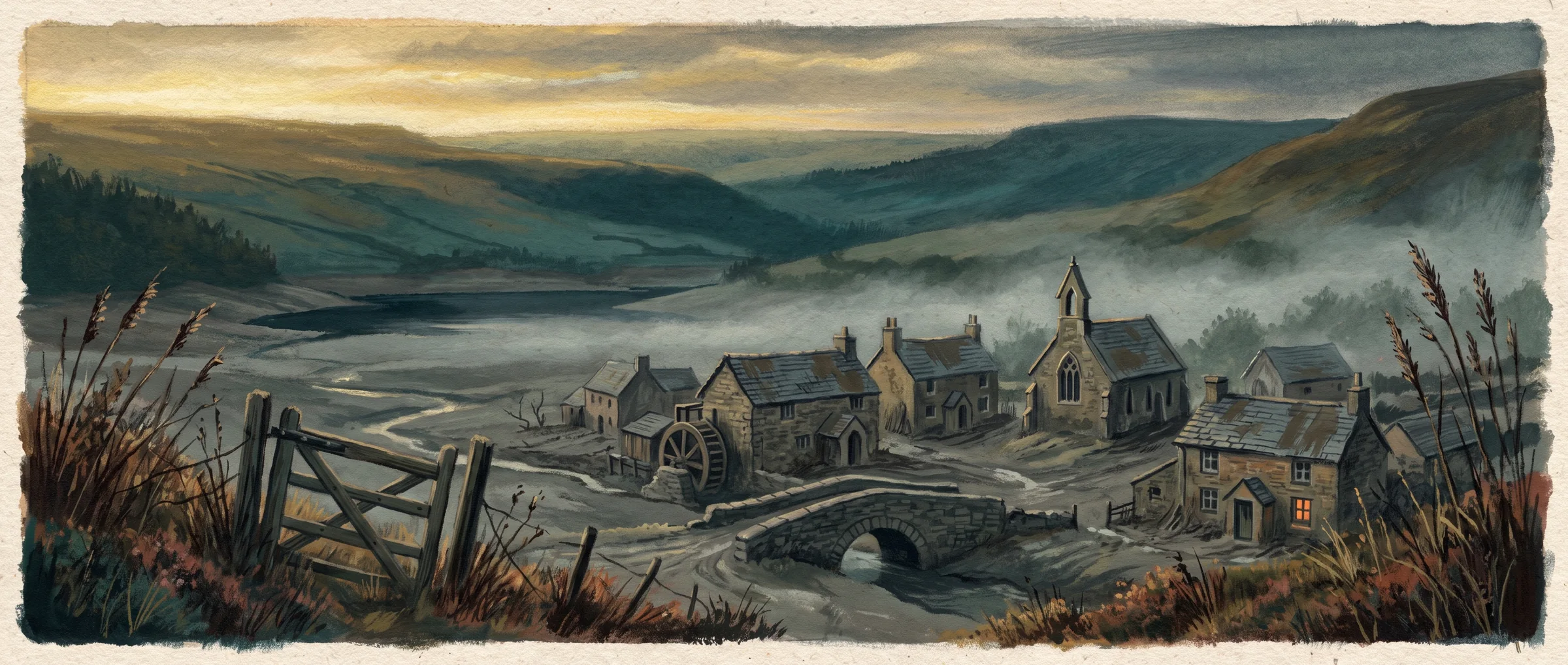
In 1961 they bought the valley, emptied it in nine days and flooded it for a reservoir. This summer the water dropped nine metres and Mosswater came back up — the mill, the schoolhouse, Chapel Row, and one cottage with your family’s name still on the deed. Sift the silt, merge what the water left, and put the village back one room at a time.
Free to play. Optional in-app purchases. No ads — not one, anywhere in the game. Plays offline. 480 MB. Rated 4+ / Everyone.
- 9 districts
- 412 hand-painted pieces
- 824 illustrations
- 34 letters
- No lives
- No countdown timers
Three years. Eleven people. Reedhouse Studio, Bristol.
- 412objects, each painted twice: once as the water left it, once as it should be
- 824finished illustrations in the build
- 34letters, all free, all part of the story
- 9districts, none of them paywalled
- 0lives, timers and ads
Closed test: 2,900 players · 14 builds · eleven months of notes
The same lane, twice
Drag the water line.
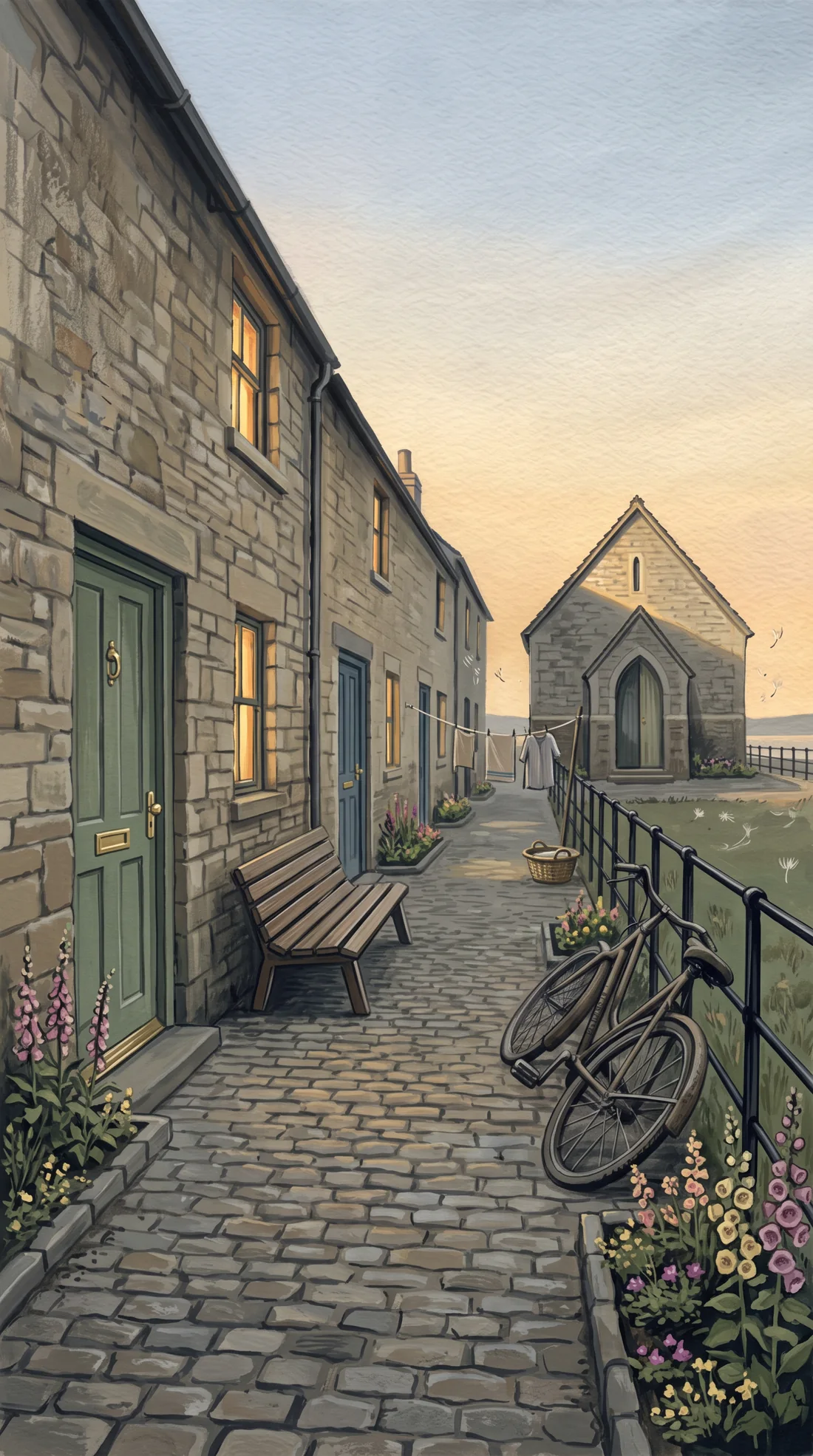
Every restored view in Mosswater is a second illustration, painted from scratch — the same lane, the same lens, the same time of day, repainted by hand. Not a brightness filter over the ruined one.
412 objects, painted twice, animated at twelve frames a second like a picture book.
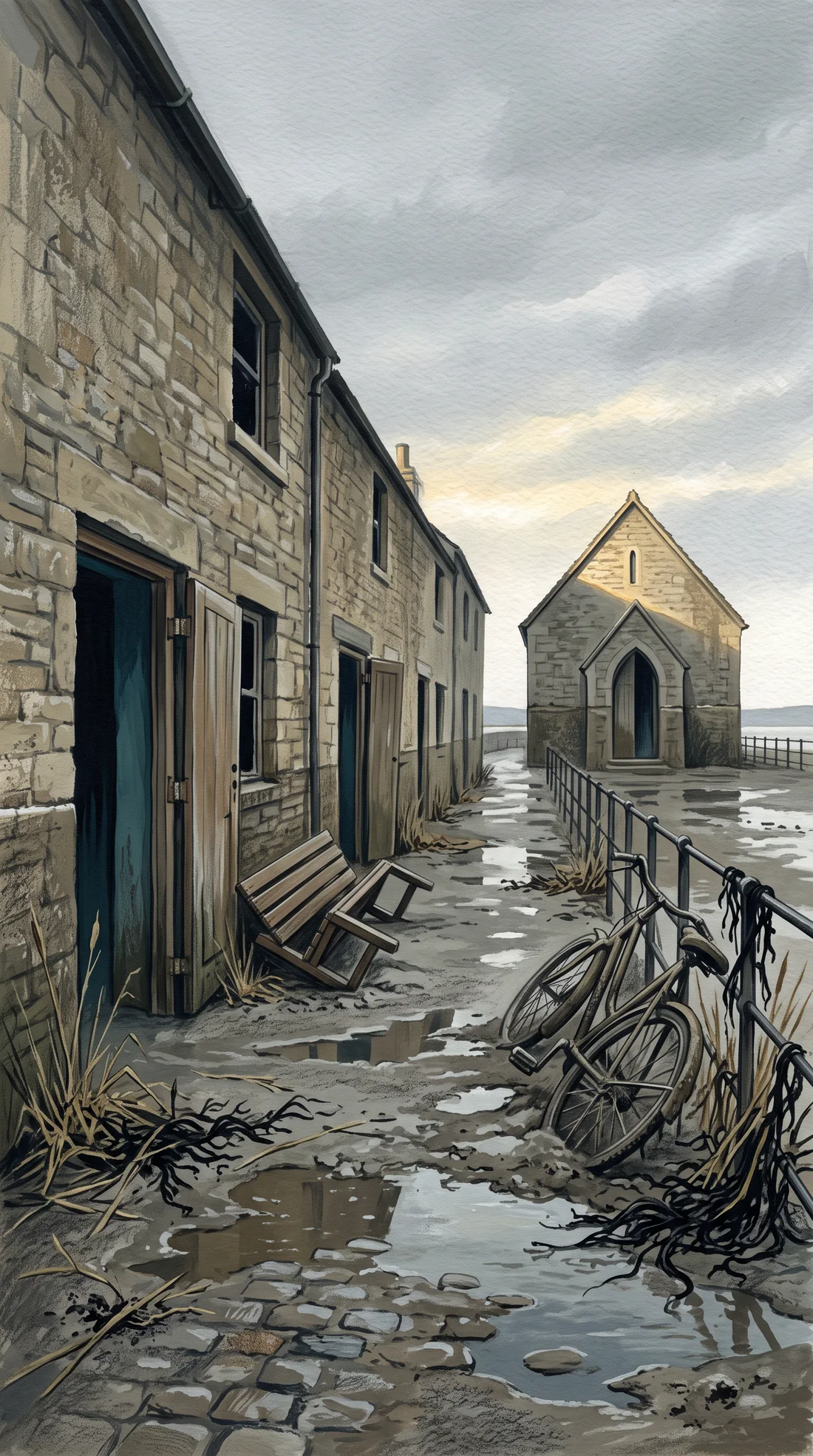
 Chapel Row — the day the water left
Chapel Row — 214 pieces later
Chapel Row — the day the water left
Chapel Row — 214 pieces later
How it plays
Ninety seconds in Elsie’s kitchen.
Two minutes on a bus, or an hour on a Sunday. The board is open either way.
-
00:00Sift
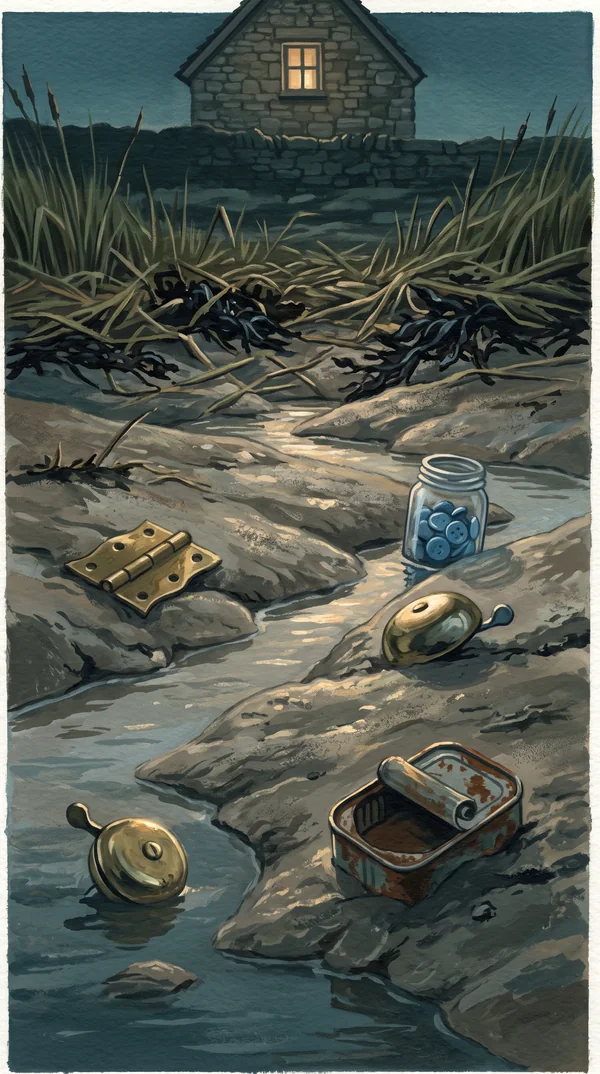
You tap a silt bank on the foreshore below the cottage. It gives up what it gives up: a warped brass hinge, a jar of blue buttons, half a bicycle bell, a seed tin with the lid rusted shut.
-
00:22Merge
The hinge lands on your workbench — a 7×9 board with no timer on it and no lock. Two of a kind, always. Seven tiers, six chains: Ironwork, Glass, Garden, Cloth, Paper, Bell-metal. Four Rusted Hinges make one Range Door Plate. Because the board never locks, you can hold one back and bank a pair for a job you can already see coming.
-
00:58Place
The plate goes on the range door it came off, in Elsie’s kitchen, under four inches of silt. It is the last piece in the room. The whole view repaints from silt to lamplight in one held beat, and the second letter in the tin unseals itself.
-
01:26Choose
Finish the kitchen as the 1961 parish photograph shows it, as Elsie sketched it in the margins, or as you like it. All three are fully painted. Changing your mind later costs nothing, forever.
Then you go and stand on the foreshore again, because Bramble Lane is next and something down there does not match the parish record.
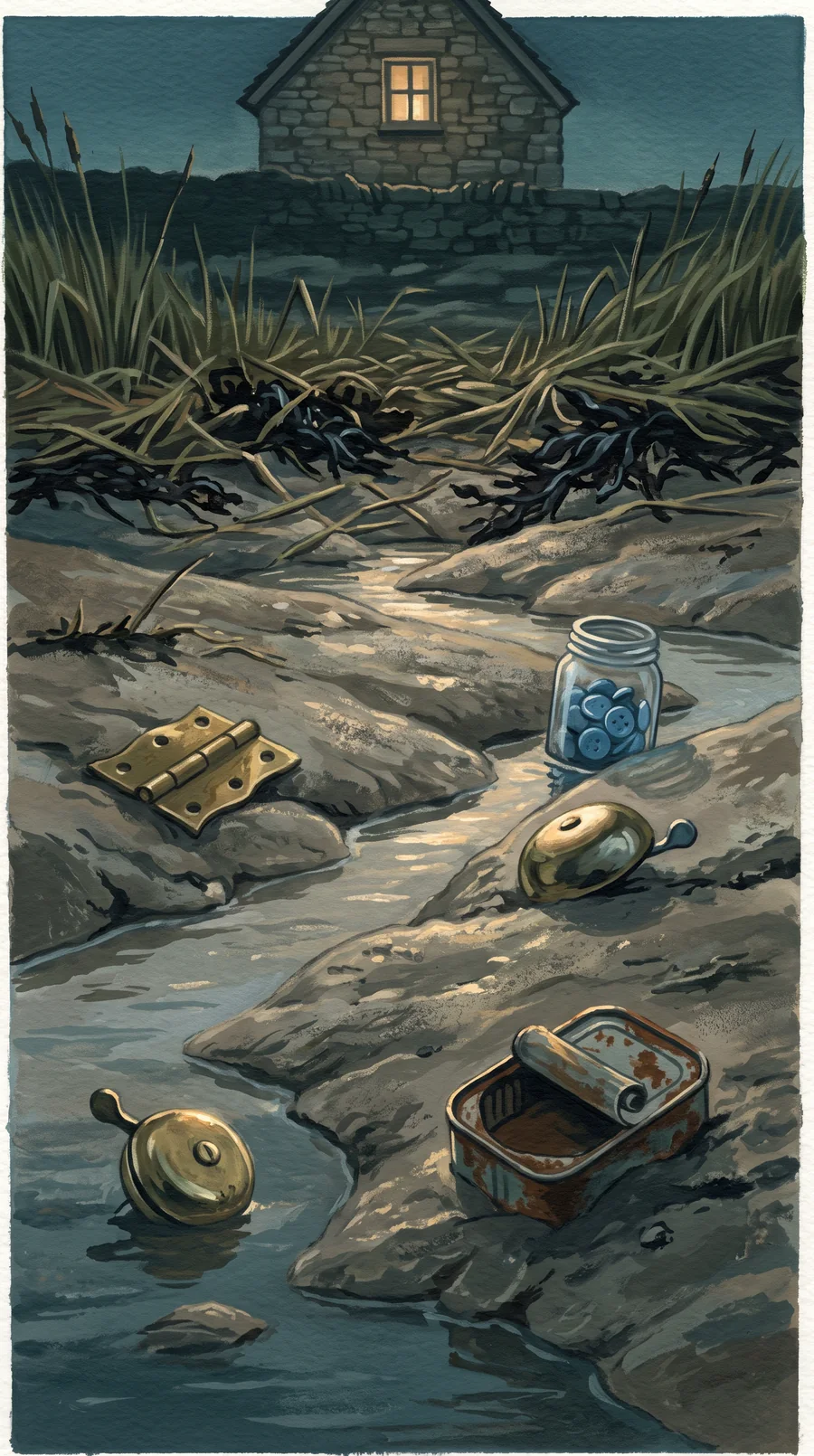
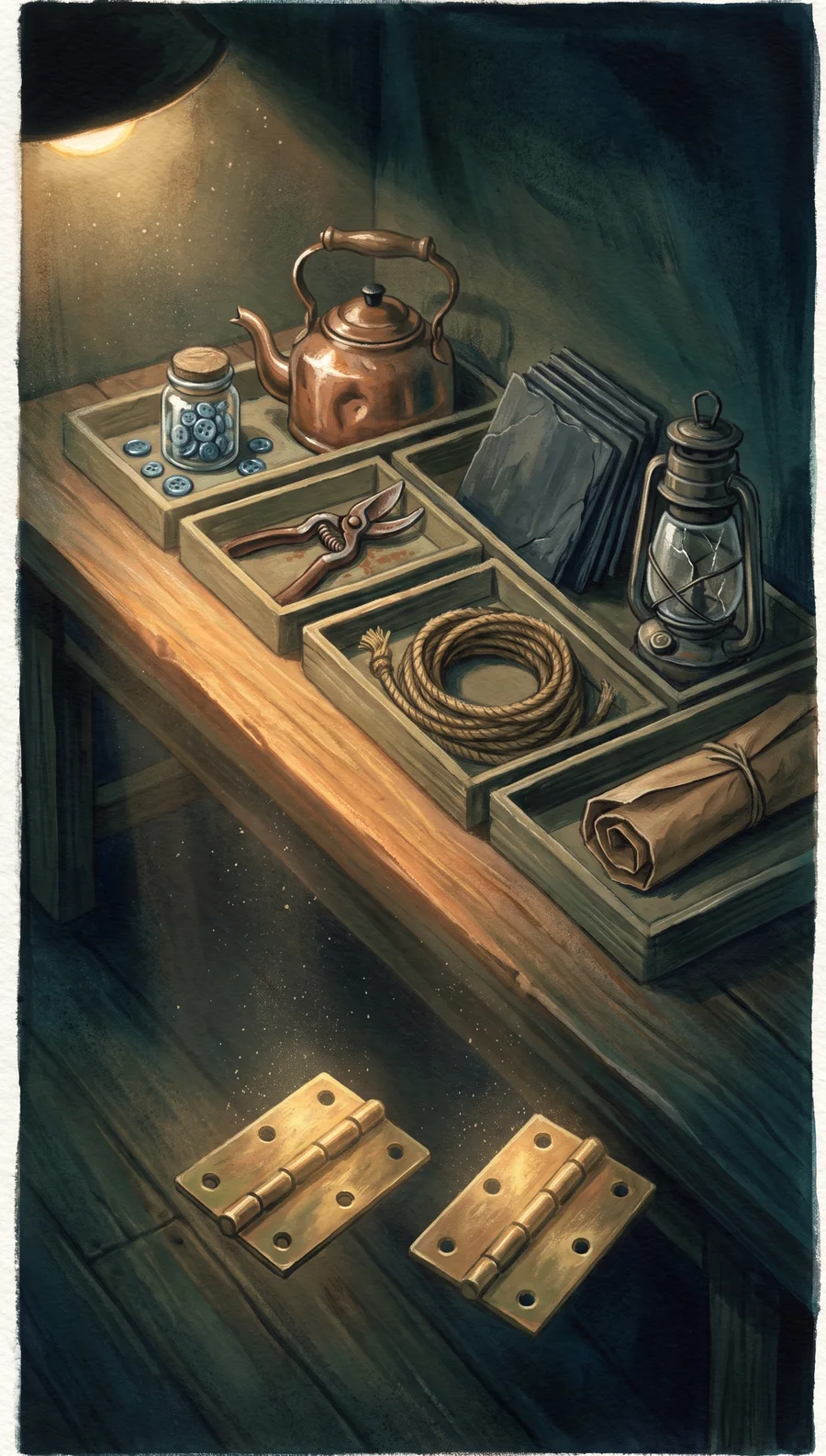
Left: the foreshore below Carrow’s Cottage. Right: the workbench, and the pair you have been waiting on.
The letters
“Dear Tom — they have given us nine days. Nine. I have taken the clock, the dog, and the wrong photographs. I did not take the bell because I could not lift it, and because I did not believe them.”
— Elsie Carrow, 14 March 1961
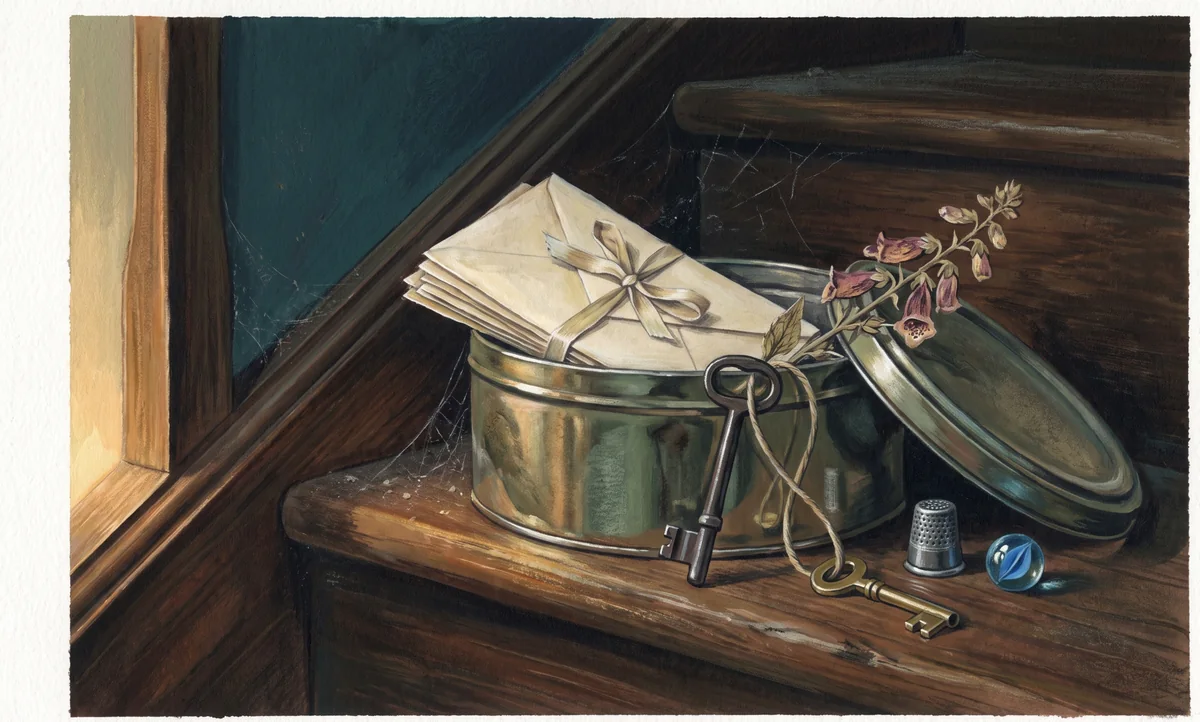
Elsie wrote thirty-four of these. She posted none of them. They were in a biscuit tin under the stairs of the cottage she left you, with a set of keys that still turn. Restore a room and the next letter unseals. Restore Chapel Row and you find out why she went back on the tenth day.
All 34 letters are free. There is no letter behind a purchase and there never will be.
The valley
Nine districts, and the water gives them back in order.
Mosswater valley · parish sheetSurfaced 3 of 9
- 01Carrow’s CottageTwo rooms, one range, a kitchen floor under four inches of silt.
- 02Bramble LaneSix front gardens. The first thing down here that does not match the parish record.
- 03The MillraceThe wheel still turns if you rebuild the sluice. It has not turned since March 1961.
- 04Chapel RowEleven pews, one organ, and a tower with no bell in it.
- 05The SchoolhouseForty-one desks. Thirty-eight names in the register.
- 06The Boathouse & JettyWhere the salvage crews tied up, and where they gave up.
- 07The Walled GardenEverything died. Two things did not. Sixty beds to replant.
- 08The Station HaltOne platform, one bench, a timetable that ends on a Tuesday.
- 09The BelfryLocked until the other eight are standing.
412 pieces across nine districts, and not one of them is sold separately.
The returning
Nine people came back to watch. Each of them wants one thing out of the mud.
You are not restoring Mosswater for a score. Word gets round that the valley is up, and they come and stand on the ridge with folding chairs — the ones who were children when the notice came, and the ones who were not born until after. Each of them is waiting on one specific object. Find it, put it back where it came off, and they move down off the ridge for good.
-
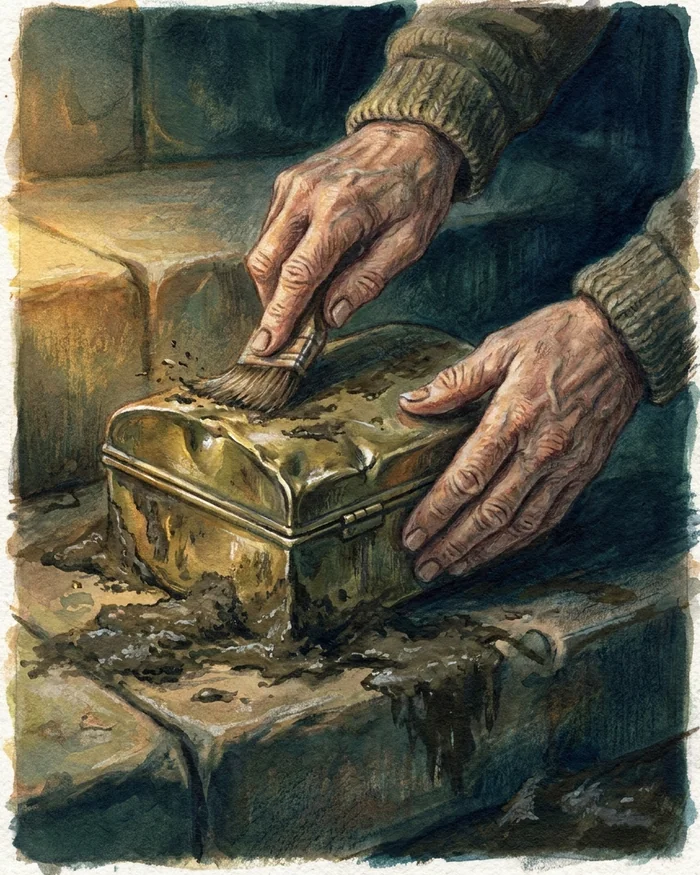
Margaret Slee
79. The schoolmistress’s daughter. Left on the seventh day with a satchel and no shoes.
- Wants
- The brass register box
- Gives back
- The school key, and forty-one desks you can put back
-
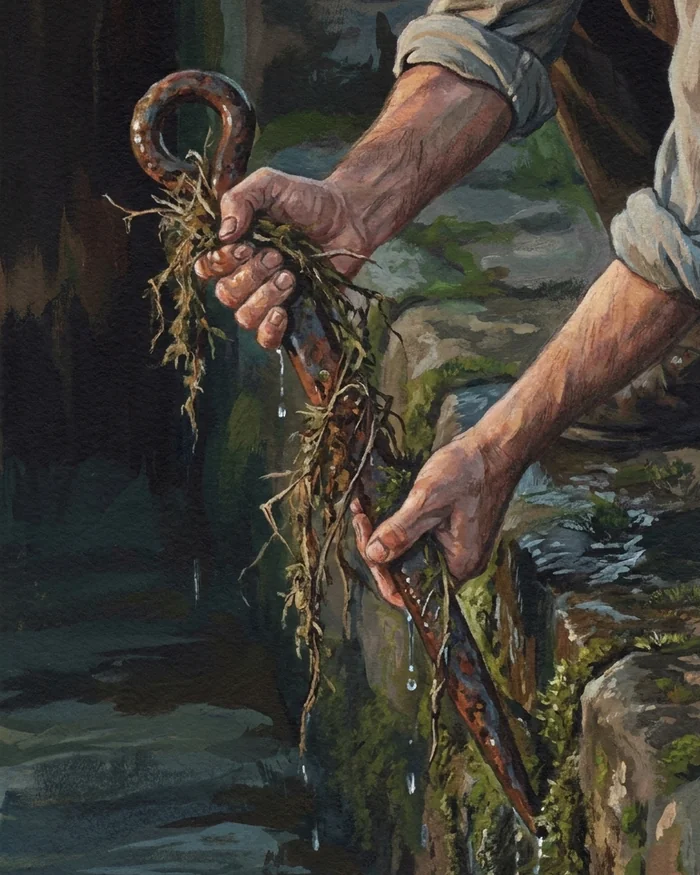
Tom Havers
74. Milled here until the ninth morning and has not been back since.
- Wants
- The sluice pin from the millrace
- Gives back
- The wheel turning, and the workshop bench
-
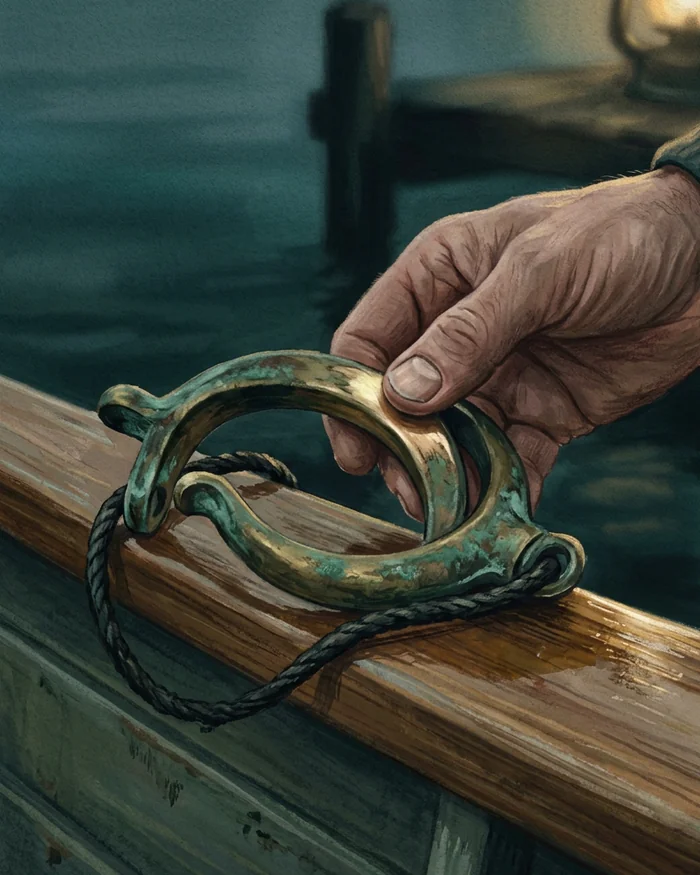
Joan Brell
68. Born in the boathouse the year before the notice went up.
- Wants
- Her father’s rowlocks, brass, marked with a J
- Gives back
- The jetty, and the lantern that hangs on it
Six more are up on the ridge. One of them will not say what she is waiting for.
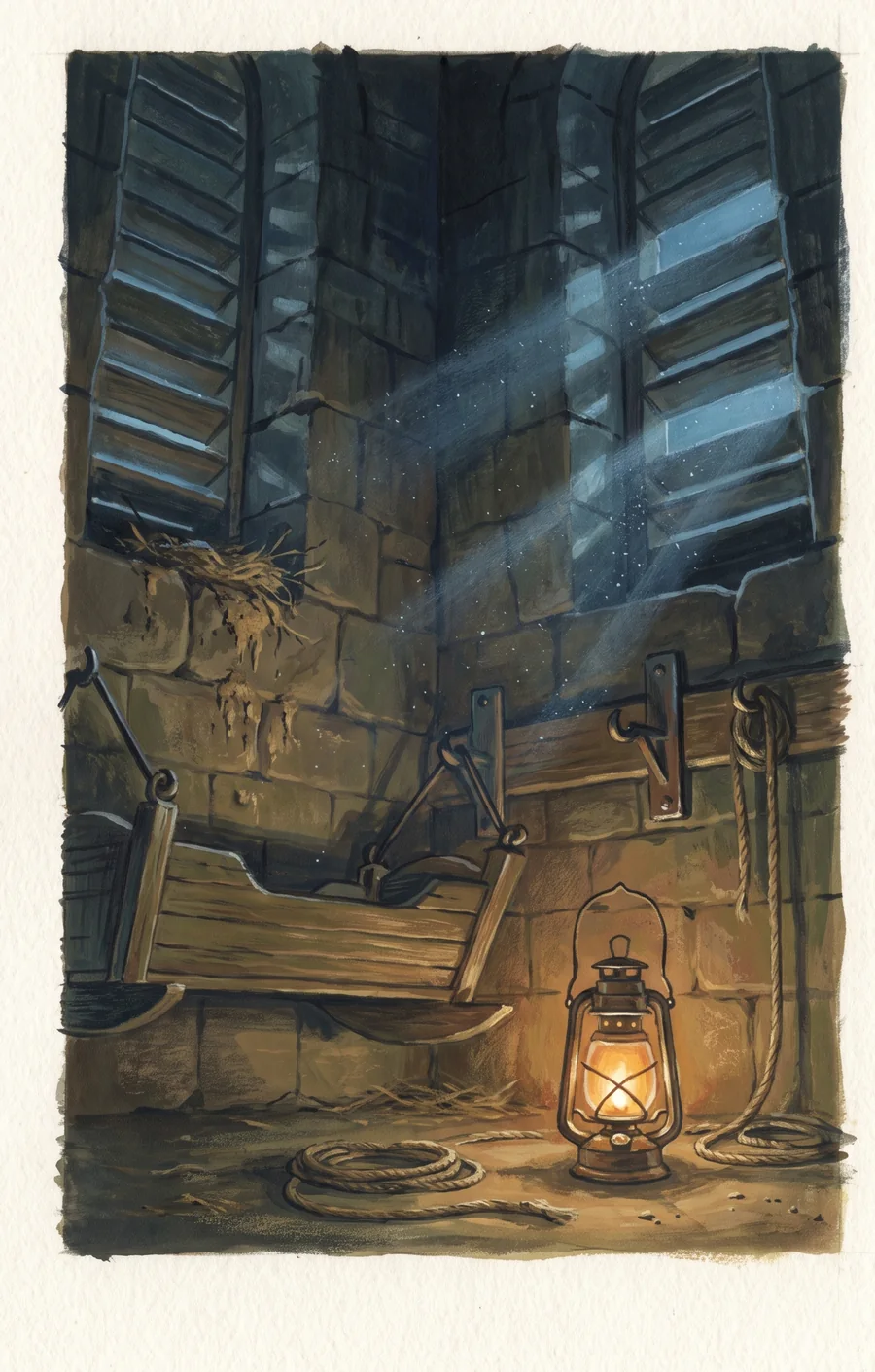
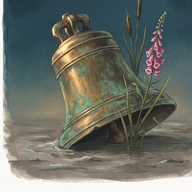
The bell was cast in 1804 and weighs 340 kilograms.
She is called Ada because bells that size get names.
The salvage contract lists everything the crews took out of Mosswater between January and March 1961 — the pews, the organ pipes, nine hundred slates, the war memorial. Ada is on the list. Ada was never delivered.
For eleven years after the valley filled, people on the far shore reported hearing a bell across the water, usually in fog, usually early. The water board investigated twice and wrote the same sentence both times. You will find that sentence in the schoolhouse.
There are three things in this valley that do not match the parish record. The first one is in Bramble Lane and you will walk past it about nine minutes in.
We are not going to tell you the other two.
Every Sunday
Low Water gives every player the same foreshore.
At 06:00 on Sunday the water drops another half metre for everyone at once, and it drops on the same seeded foreshore — identical silt banks, identical finds, identical order, whichever phone you open. You are ranked on pieces recovered, never on money spent, and the ten best recoveries are replayable inside the app so you can watch exactly where somebody found a chain you did not. It runs for twenty-four hours. There is no entry cost, no ticket, no countdown pressure — miss it and the next one is seven days out.
- Tide
- Seeded
- Foreshore
- Identical for all
- Ranked by
- Pieces recovered
- Entry cost
- None
The Sunday tide, and what it uncovers, is the same for every player alive.
Monetisation, in full
One page, every way we take money.
Mosswater is free to download and free to finish. All nine districts, all 412 pieces, all 34 letters and the whole ending are in the free game. There is nothing you have to buy to see the end of the story.
No ads — not one, anywhere in the game. Not in a room, not between rooms, not for a bonus, not on a loading screen. (This sentence appears word for word in our App Store and Google Play listings, and it is the behaviour of the build.)
- No lives. No hearts. No countdown timer anywhere on the board.
- No premium currency, no loot boxes, no crates, no wheels, no draws — merging is two of a kind, always, and never a chance.
- No season pass, no subscription, no rented content.
The one limit, named plainly: sixty finds a day.
The silt banks give up sixty objects in twenty-four hours, and they refill while the game is shut. We are calling that what it is — a daily cap. It is not a five-minute energy meter and it does not lock the board: everything already on your workbench stays merge-able all day, so a cap day still plays. In our closed test, sixty finds was more than nine players in ten used in a session.
What you can buy, if you want to: silt kits (a bundle of extra finds for a day, from $2.99) and decorations for the districts you have already restored (from $1.99). That is the entire shop. Both are cosmetic or convenience, both are optional, and neither unlocks a letter, a district, a piece or an ending.
What the testers said
2,900 people ran the valley before you.
-
“I found Joan’s rowlocks on a Tuesday morning at a bus stop and I actually said out loud, there you are. My husband asked what I was doing. I said putting a jetty back.”
Denise · Build 11 -
“I have quit four merge games over the lives thing. This one never once told me to come back later, and I kept catching myself going back anyway.”
Pauline · Build 13 -
“Watching the kitchen repaint itself when the last piece lands is the best thirty seconds in any game on my phone. I have made my sister watch it twice.”
Marian · Build 14
Closed test · Builds 9–14 · iOS and Android · Quotes published with written permission, unedited except for length
2,900 testers · 14 builds · 11 months · 6,180 pieces of feedback read, and the reason the board is 7×9 instead of 6×8.
Reedhouse Studio
We painted the kettle for a day and we would do it again.
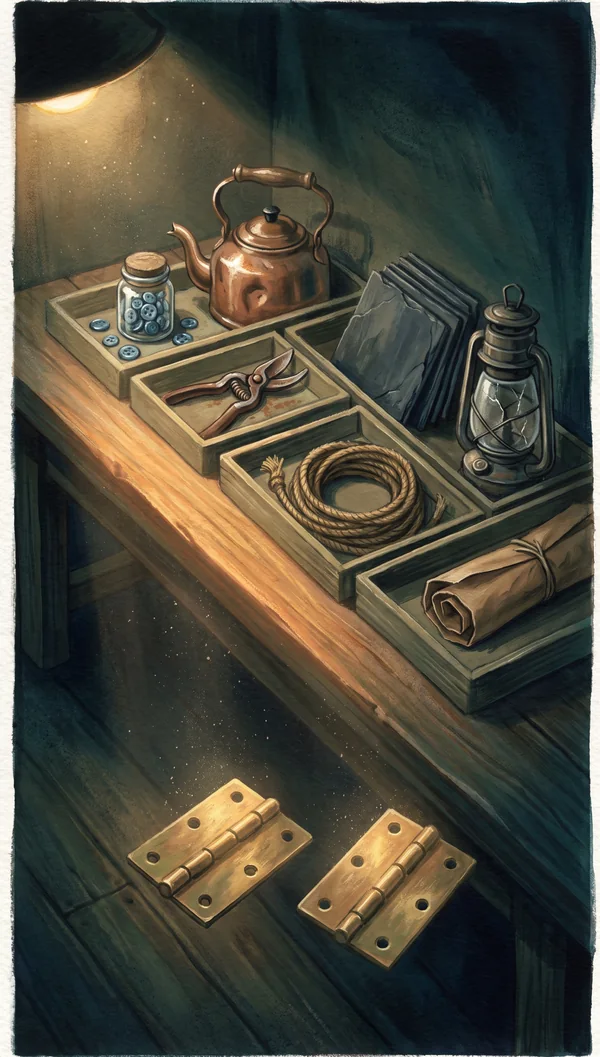 One · PencilTwo · Block-inThree · ColourFour · Final
The same corner of the workbench, four stages. Nothing in this game is a 3D render.
Reedhouse Studio is eleven people in Bristol. Mosswater took three years, most of it spent painting things twice — once as the water left it, once as it should be. Nothing in this game is a 3D render. Nothing is an asset pack. The kettle took a day, the range door took two, and the chapel organ took most of a fortnight and is still the thing I am proudest of.
Mosswater is invented. So is the valley, so is the parish, so is every person in it. Reservoir clearances did happen in Britain within living memory, and we read about them for a year before we started drawing — and then we made a place that never existed, on purpose, because the real ones belong to the people who lost them and are not ours to sell.
— Hana Whitlock, art director, Reedhouse Studio
- 412 objects
- 824 illustrations
- 3 years
- 11 people
- 480 MB
Questions
Straight answers.
- Is it actually free, or free until chapter three?
- Actually free. All nine districts, all 412 pieces, all 34 letters and the ending are in the free game. The shop sells silt kits and decorations. Nothing in the story is behind a purchase.
- Ads?
- No ads — not one, anywhere in the game. Not in a room, not between rooms, not for a bonus, not on a loading screen.
- Is it a merge game, a decorating game, or a hidden object game?
- A merge game. You sift objects out of the silt, merge two of a kind up seven tiers on a 7×9 board, and place what you build back onto the exact thing it came off. The decorating is a free choice at the end of each room, not the mechanic.
- Lives, hearts, timers?
- None. The board never locks. The only limit is sixty finds a day, which refill while the game is closed, and everything already on your board stays playable on a cap day.
- Does it work offline?
- Everything except Sunday’s Low Water, which needs a connection to pull the week’s seed and post your recovery. The rest of the valley plays on a plane.
- Devices and storage?
- iOS 15 and up, Android 9 and up. 480 MB installed. Portrait, one-handed, tap and drag only — no pinch, no double-tap, no timed input anywhere in the game.
- Will I lose my progress if I change phone?
- No. Saves move between devices with a free account, and nothing you have unlocked is ever taken away.
- How long is a session?
- As long as you want. Ninety seconds finishes a room’s last piece; an hour on a Sunday finishes a room. There is no session the game pushes you out of.
Nine days to leave it. Take as long as you like putting it back.
Free to play · All nine districts free · No ads, no lives, no countdown timers · 480 MB · Rated 4+ / Everyone